



姓名:付艳龙
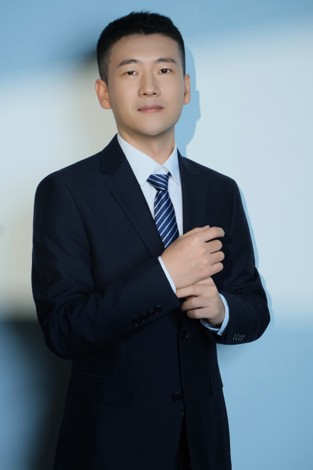
职称:讲师,硕士生导师
研究方向:
(1)载能离子与物质相互作用过程中的电子阻止本领及电子能损机制方面的研究
(2)辐照损伤微观机制方面的研究
(3)先进辐射探测技术探索
联系方式:
邮箱地址:ylfu@ncepu.edu.cn
一、个人简介
北京师范大学核科学与技术学院博士、物理与天文学院博士后。获2020届北京师范大学优秀博士毕业生,毕业论文获首届中国核工业教育学会优秀博士学位论文奖。长期开展载能离子与物质相互作用及辐照损伤微观机制等方面的研究,相关研究成果发表在Physical Review A、J. Phys. : Condens. Matter、NIMB、Mater. Today Commun.等领域内国际权威期刊上。先后主持2项国家自然科学基金和 1项中央高校基本科研业务费面上项目。中国辐射防护学会放射生态学理事、中国核工业教育学会核仪器教育委员、北京核学会青年工作委员。
二、代表性科研项目
国家自然科学基金(青基),在研,主持
国家自然科学基金(专项),结题,主持
校级博士后项目,结题,主持
2025中央高校基本科研业务费面上项目,在研,主持
三、近年发表论文
[1] Yan-Long Fu, Zhong-Zheng Tang, Wei Cheng, Jia-Yong Zhong, and Feng-Shou Zhang*, Electronic stopping power and electronic energy-loss mechanism for a low-energy ion in TiN under channeling conditions, Phys. Rev. A, 105, 042818 (2022).
[2] Yan-Long Fu, Chang-Kai Li, Hai-Bo Sang, Wei Cheng*, and Feng-Shou Zhang*, Electronic stopping power under channeling conditions for slow ions in Ge using first-principles, Phys. Rev. A 102, 012803 (2020).
[3] Yan-Long Fu, Zhao-Jun Zhang, Chang-Kai Li, Hai-Bo Sang, Wei Cheng*, and Feng-Shou Zhang*,Electronic stopping power for slow ions in the low-hardness semimetal HgTe using first-principles calculations, J. Phys.: Condens. Matter 32,105701 (2020).
[4] Yan-Long Fu, Jia-Yong Zhong, and Feng-Shou Zhang*, Electronic stopping in ternary material SiCN: anomalous behavior of slow channeling Helium ions, Nucl. Instrum. Methods Phys. Res., Sect. B 548, 165230 (2024)
[5] Yan-Long Fu, Hai-Bo Sang, Wei Cheng*, and Feng-Shou Zhang*, Topological properties after light ion irradiation on Weyl semimetal niobium phosphide from first principles, Mater. Today Commun.,24, 100939 (2020).
[6] Yan-Long Fu, Chang-Kai Li, Zhao-Jun Zhang, Hai-Bo Sang, Wei Cheng*, and Feng-Shou Zhang*,Electronic properties of defects in Weyl semimetal tantalum arsenide, Chin. Phys. B 27,097101 (2018).
[7] Feng-Shou Zhang*, Yan-Long Fu, Fei Mao, Chang-Kai Li, and Chao Zhang, Progress on microscopic mechanism of electronic energy loss in the interactions between low energy ions and matter, Journal of Beijing Normal University (Natural Science), 58(5), 755-762 (2022).
[8] Jun Chen, Yan-Long Fu, Fang Sun, Zheng-Guang Hu, Xing Wang, Ting Zhang, Feng-Shou Zhang, Xiao-Ling Wu, Guo-An Cheng, and Rui-Ting Zheng, Oxygen vacancies and phase tuning of self-supported black TiO2-X nanotube arrays for enhanced sodium storage, Chem. Eng. J. 400, 125784 (2020).
[9] Zhao-Jun Zhang, Yan-Long Fu, Wei Cheng*, and Feng-Shou Zhang*, Electronic properties of defects induced by hydrogen and helium radiation on Weyl semimetal niobium arsenic, Comput. Mater. Sci. 160, 9-15 (2019).
[10] Hui-Hui Yan, Yan-Long Fu, Wei Cheng*, and Feng-Shou Zhang*, Electronic properties of defects induced by hydrogen and helium radiation on semimetal MoTe2, Chem. Phys. 565, 111764 (2023).
[11] Wei Cheng, Yan-Long Fu, Min-Ju Ying, Feng-Shou Zhang*, Electronic properties of defects induced by H irradiation in tantalum phosphide, Chin. Phys. Lett. 34,127101 (2017).
[12] Chang-Kai Li, Fei Mao, Feng Wang, Yan-Long Fu, Xiao-Ping Ouyang, and Feng-Shou Zhang*, Electronic stopping power of slow-light channeling ions in ZnTe from first principles, Phys. Rev. A 95, 052703 (2017).
[13] Chang-Kai Li, Fei Mao, Yan-Long Fu, Bing Liao, Xiao-Ping Ouyang, and Feng-Shou Zhang*, Electronic stopping power of slow H+ and He2+ ions in CdTe from first principle, Nucl. Instrum. Methods Phys. Res., Sect. B 392, 51-57 (2017).